
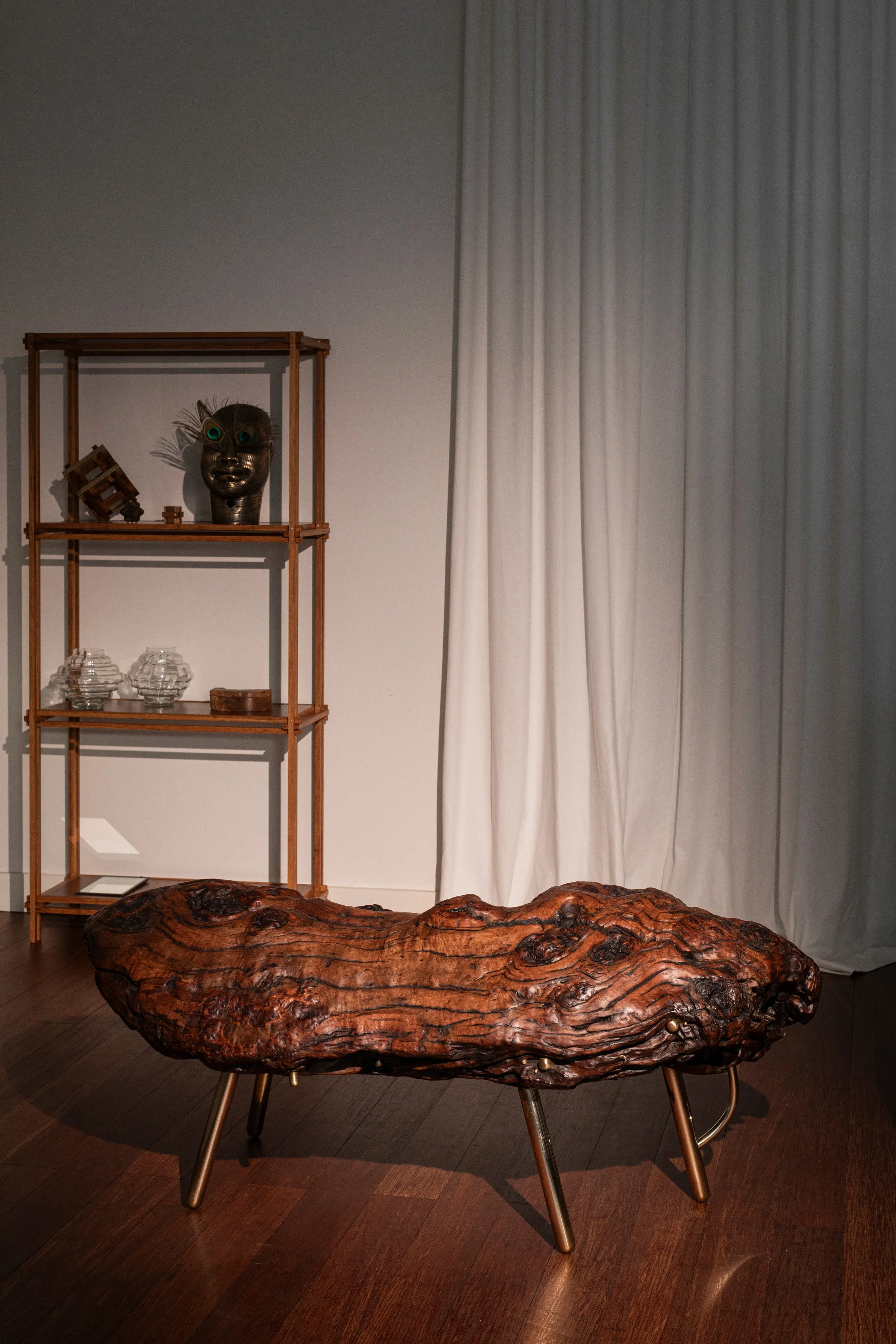
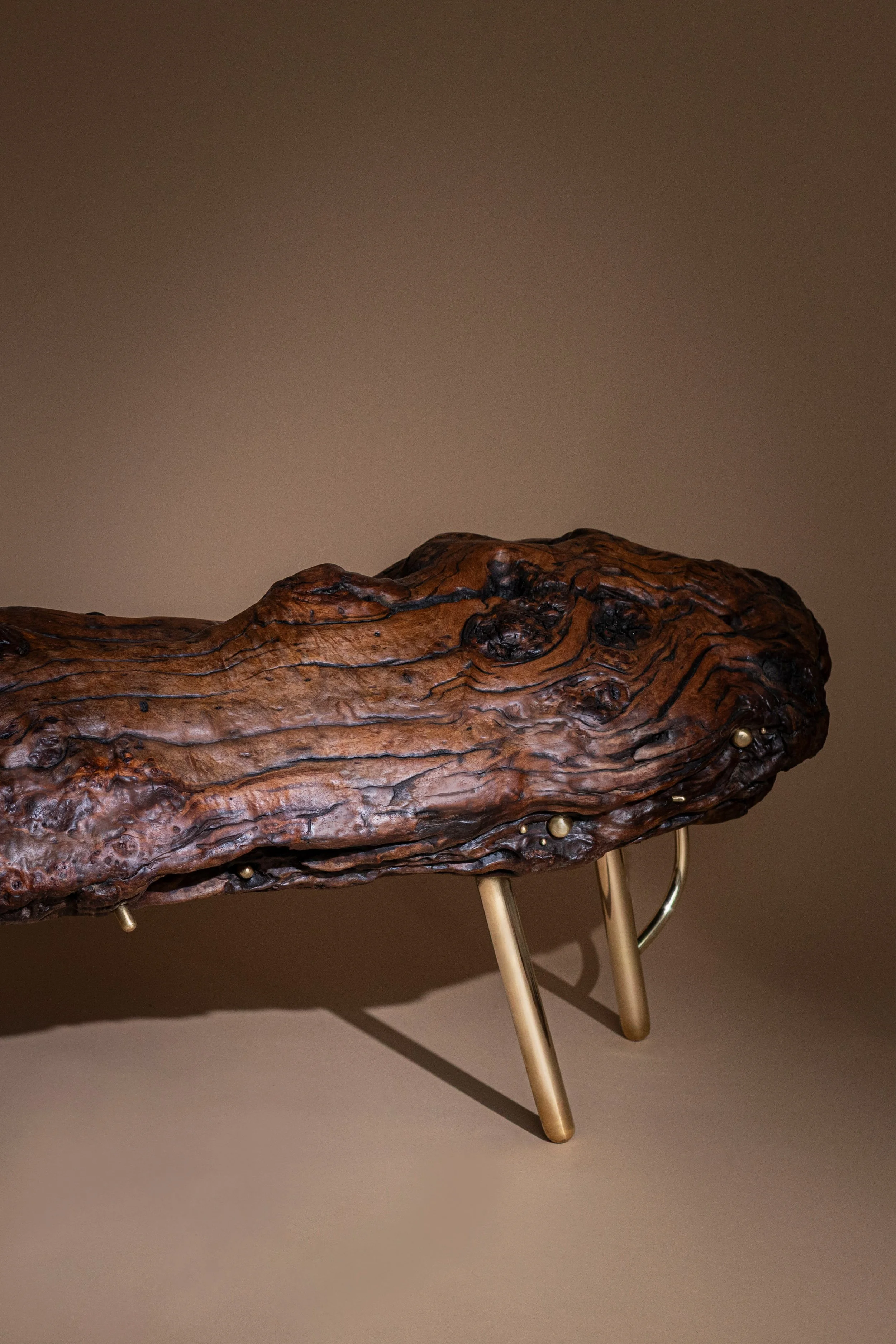
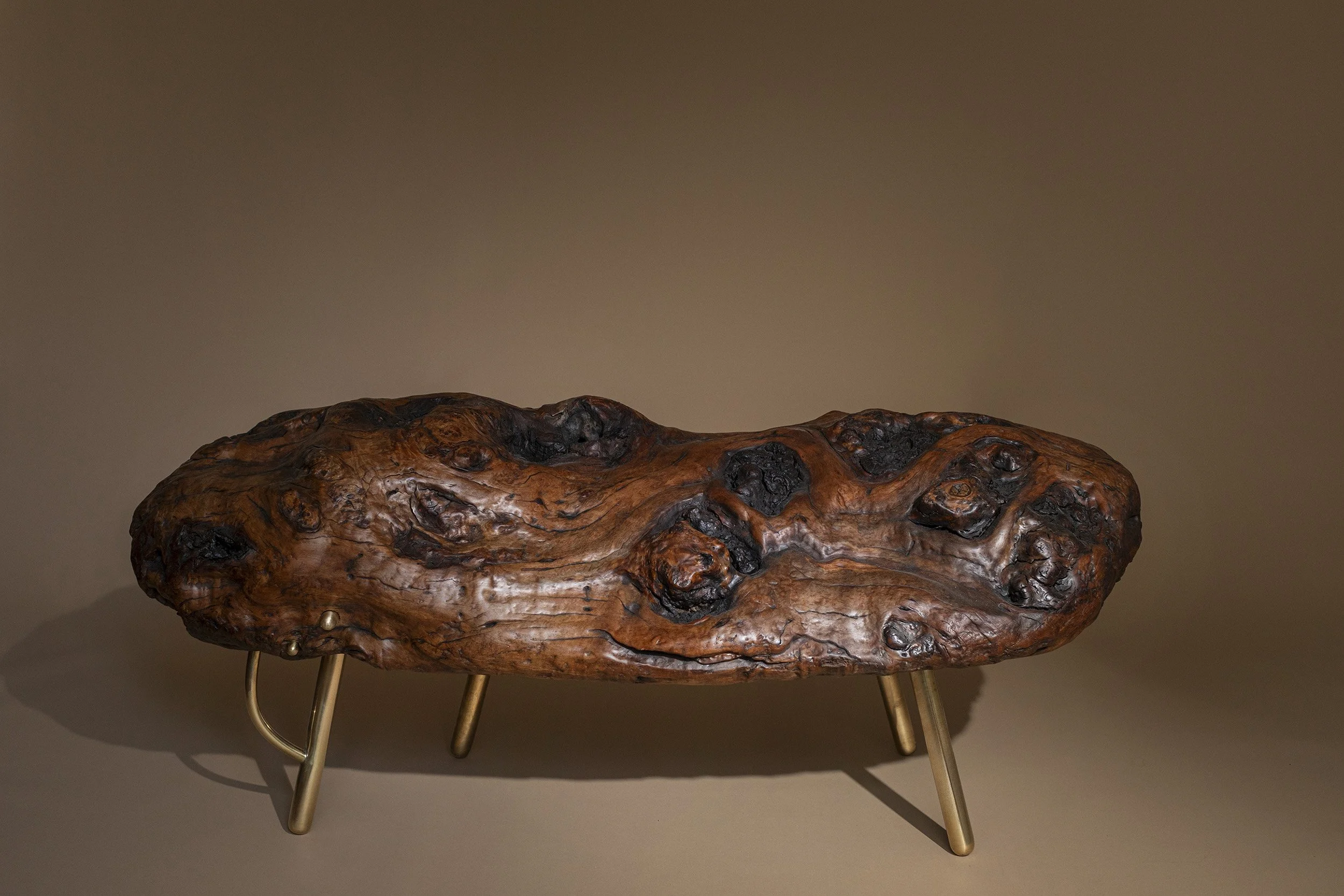
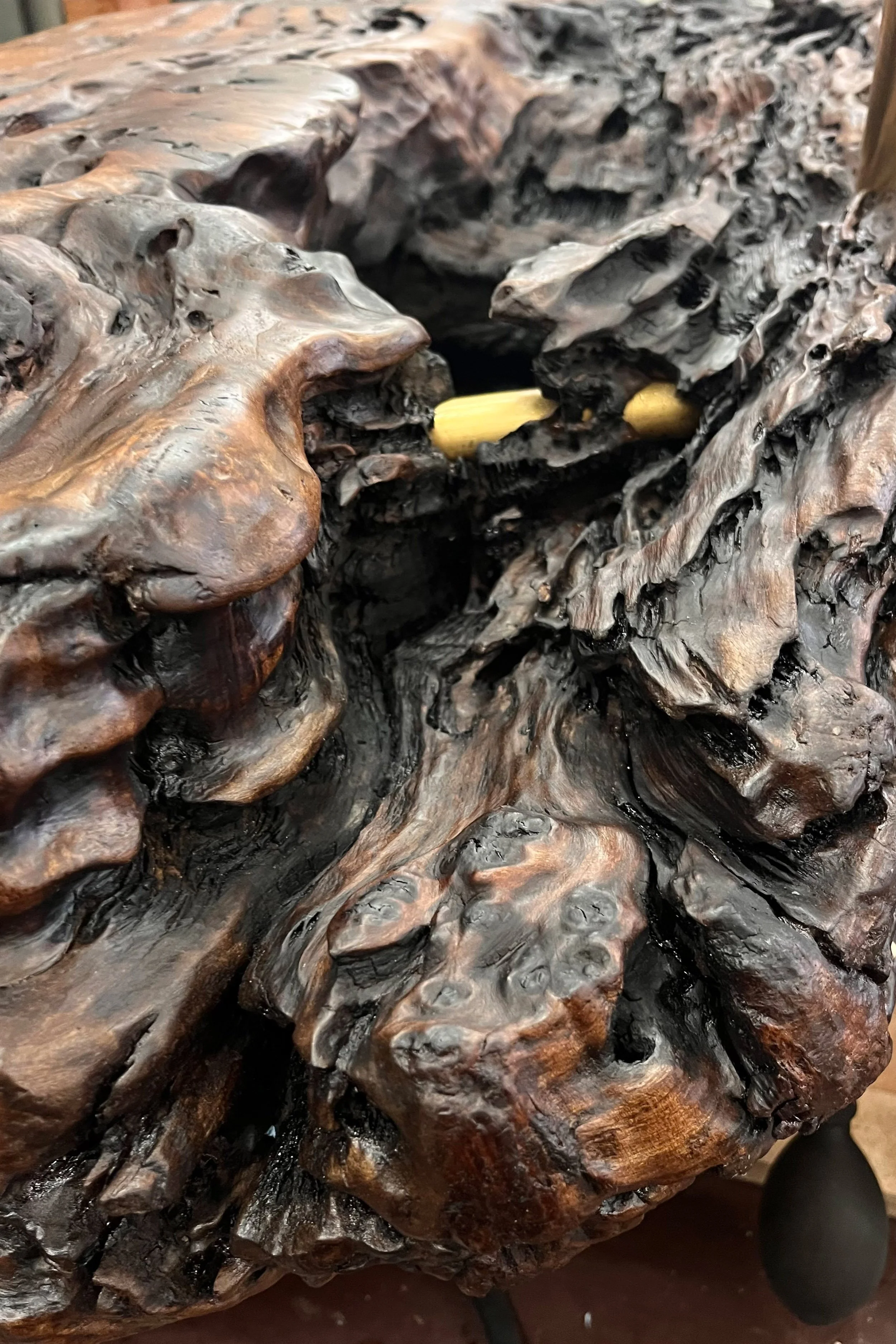
L 131cm x D 60cm x H 58cm
New Zealand Drift Wood (Rata) / Brass / Hardwax Finish
HOT FUDGE BURL BENCH
THE STORY OF THE BENCH
This bench started long before I knew it would become a bench.
In 2018 we were restoring an old wintergarden with a tropical pond at its centre. We wanted to create a fragment of forest inside, and needed large pieces of wood that plants could inhabit and grow over—natural forms with a complexity, we couldn't design ourselves.
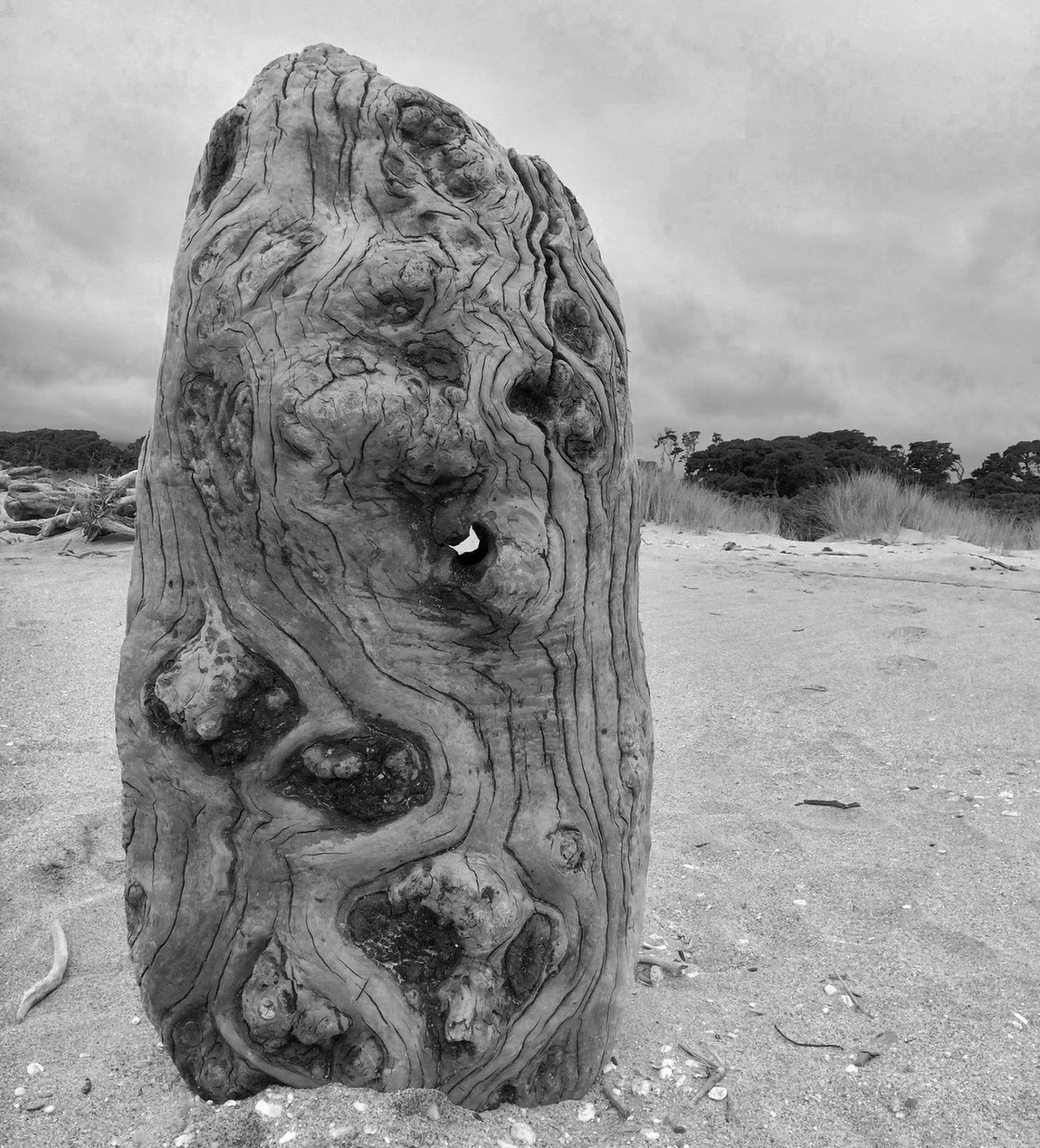
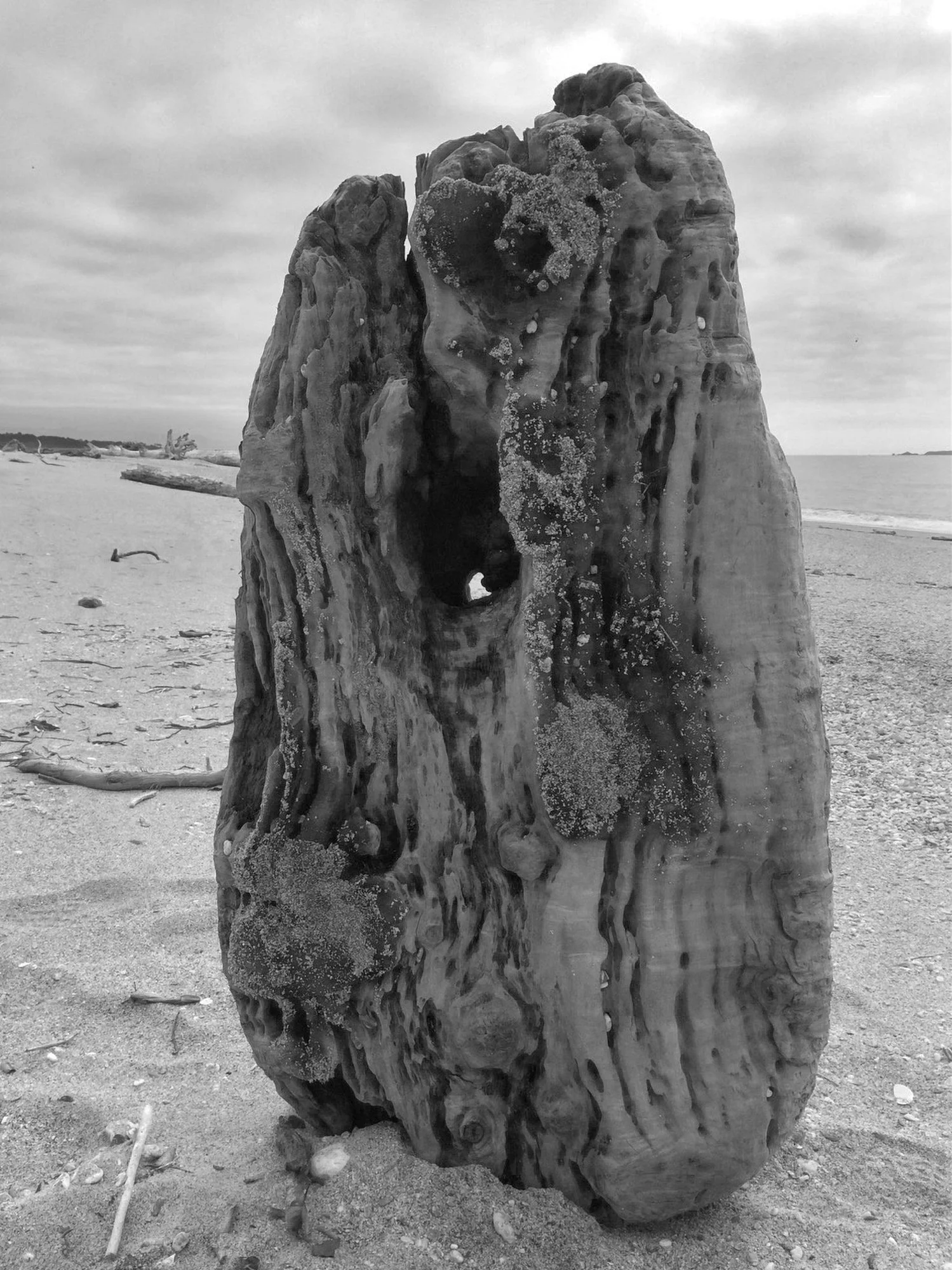
That search led us to Nigel Peterken. Nigel was British, but spent about six months each year travelling the coastline of New Zealand collecting driftwood. He was one of very few people licensed to do so, and he had an extraordinary eye. I remember looking through his collection thinking I would have bought all of it if I had the money. Knowing what I know now, I wish I had. Among his collection was a burl of northern rātā (Metrosideros robusta) that Nigel called Hot Fudge. He was particularly attached to it. He had photographed it standing upright on the New Zealand coast, almost like a sculpture. When I asked to buy it, he actually raised the price—he was reluctant to let it go.
Northern rātā has an extraordinary, almost brutal way of life. It begins high in the canopy, supported by another tree, then sends roots towards the forest floor. Over time they thicken and intertwine, gradually, enclosing the host that once supported it. The rātā can eventually become a giant in its own right, living for centuries.
Nigel believed Hot Fudge had spent at least eighty years in the water. Rātā is extremely dense, and according to him the burl had remained submerged, slowly shaped by the currents. Its hollows, channels and rounded edges still trace that movement.
When it came to me it was waterlogged, grey from exposure and deeply cracked. Nigel warned me that it would take a long time to dry and might split further.
So I put it somewhere I passed frequently and contemplated its potential. On the other side of the world, in Belgium, the burl was adapting once again—this time to a dry, indoor environment. As the wood slowly changed, so did my idea of what it might become.
For a long time I imagined presenting it vertically, much as Nigel had photographed it. Then I began sanding it by hand. There isn't a straight line on the entire piece, and a machine would have destroyed the subtle curves. As the grey disappeared, I began to understand the burl through my hands. Its surface became incredibly smooth. Fingers could follow every hollow, knob and curve—the forces that had shaped it over time. That is how the bench evolved.
As a sculpture, people would stand back and look. As a bench, they have to come into contact with it: to sit, touch and explore its surface. The crack had opened slightly while drying, so I secured it with brass rods crossing the wood at different angles. Rather than hide the problem, the intervention became part of the object. There is very little of me in the shape of this bench.
Shortly after we completed the wintergarden, the pandemic began. Nigel did not survive it. The collection I had once looked at thinking one day, suddenly belonged to a particular moment in time. So perhaps making this bench was never really about designing a form. It was about recognising one. Time was the designer.
My role was to understand what was already there, intervening only where necessary, and finding a way for someone else to experience it. A tree grew for centuries. Water worked on it for decades. Nigel found it. Time continued to shape it.
And eventually, it became a place to sit, touch, and read its history.